
Esempio
Esempio di rimozione dello sfondo dai bordi difficili
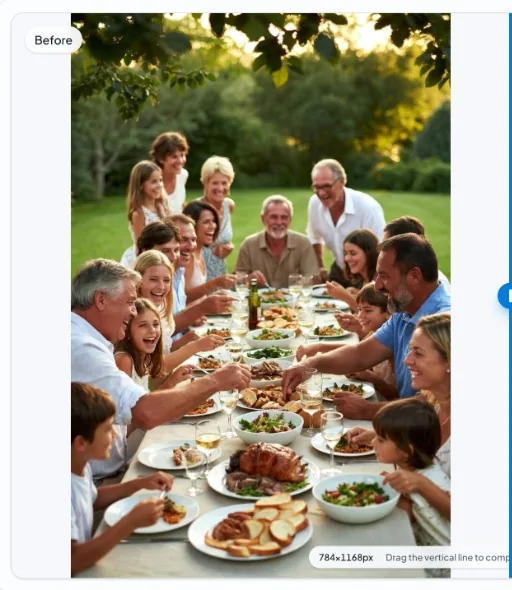
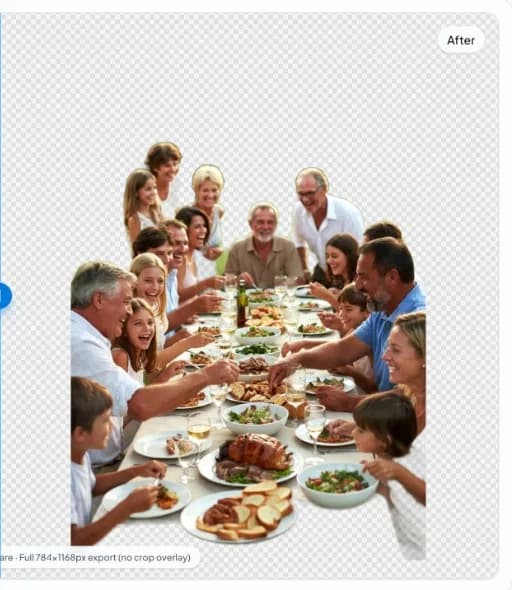
Scena di una cena all'aperto: molte persone, cristalleria e disordine sul tavolo da nobg.eu.
In breve
- Sfida: bicchieri di vino, braccia sovrapposte, primo piano complesso.
- Aspettative: maschera utilizzabile con QA manuale sugli elenchi critici.
Prima
Dopo
Difficult Edges section 1: practical detail
For Difficult Edges workflows on nobg.eu, treat background removal as a controlled production step rather than a one-click gamble. Example guidance 1 for Difficult Edges focuses on capture, mask QA, and export discipline shown in the before/after pair. Start from a source file that already separates the subject from the backdrop in luminance and color; local segmentation amplifies good capture decisions and cannot invent missing edge data. Open the asset in the browser editor, run on-device inference, then inspect the mask at 100–200% zoom along high-risk edges before you export. Use the on-page media as a visual reference, then repeat the checklist on your own files before publishing. Prefer transparent PNG or WebP masters when downstream systems support alpha, and flatten to a channel-required solid fill only after QA. Document filename patterns, padding conventions, and review checklists so teammates repeat the same quality bar without re-uploading assets to an external cutout API for every draft. When edges fail, fix lighting or reshoot rather than endlessly masking a compromised source—this is usually faster for Difficult Edges catalogs and keeps privacy intact because pixels for the core edit stay in the browser session.
Difficult Edges section 2: practical detail
For Difficult Edges workflows on nobg.eu, treat background removal as a controlled production step rather than a one-click gamble. Example guidance 2 for Difficult Edges focuses on capture, mask QA, and export discipline shown in the before/after pair. Start from a source file that already separates the subject from the backdrop in luminance and color; local segmentation amplifies good capture decisions and cannot invent missing edge data. Open the asset in the browser editor, run on-device inference, then inspect the mask at 100–200% zoom along high-risk edges before you export. Use the on-page media as a visual reference, then repeat the checklist on your own files before publishing. Prefer transparent PNG or WebP masters when downstream systems support alpha, and flatten to a channel-required solid fill only after QA. Document filename patterns, padding conventions, and review checklists so teammates repeat the same quality bar without re-uploading assets to an external cutout API for every draft. When edges fail, fix lighting or reshoot rather than endlessly masking a compromised source—this is usually faster for Difficult Edges catalogs and keeps privacy intact because pixels for the core edit stay in the browser session.
Difficult Edges section 3: practical detail
For Difficult Edges workflows on nobg.eu, treat background removal as a controlled production step rather than a one-click gamble. Example guidance 3 for Difficult Edges focuses on capture, mask QA, and export discipline shown in the before/after pair. Start from a source file that already separates the subject from the backdrop in luminance and color; local segmentation amplifies good capture decisions and cannot invent missing edge data. Open the asset in the browser editor, run on-device inference, then inspect the mask at 100–200% zoom along high-risk edges before you export. Use the on-page media as a visual reference, then repeat the checklist on your own files before publishing. Prefer transparent PNG or WebP masters when downstream systems support alpha, and flatten to a channel-required solid fill only after QA. Document filename patterns, padding conventions, and review checklists so teammates repeat the same quality bar without re-uploading assets to an external cutout API for every draft. When edges fail, fix lighting or reshoot rather than endlessly masking a compromised source—this is usually faster for Difficult Edges catalogs and keeps privacy intact because pixels for the core edit stay in the browser session.
Difficult Edges section 4: practical detail
For Difficult Edges workflows on nobg.eu, treat background removal as a controlled production step rather than a one-click gamble. Example guidance 4 for Difficult Edges focuses on capture, mask QA, and export discipline shown in the before/after pair. Start from a source file that already separates the subject from the backdrop in luminance and color; local segmentation amplifies good capture decisions and cannot invent missing edge data. Open the asset in the browser editor, run on-device inference, then inspect the mask at 100–200% zoom along high-risk edges before you export. Use the on-page media as a visual reference, then repeat the checklist on your own files before publishing. Prefer transparent PNG or WebP masters when downstream systems support alpha, and flatten to a channel-required solid fill only after QA. Document filename patterns, padding conventions, and review checklists so teammates repeat the same quality bar without re-uploading assets to an external cutout API for every draft. When edges fail, fix lighting or reshoot rather than endlessly masking a compromised source—this is usually faster for Difficult Edges catalogs and keeps privacy intact because pixels for the core edit stay in the browser session.
Difficult Edges section 5: practical detail
For Difficult Edges workflows on nobg.eu, treat background removal as a controlled production step rather than a one-click gamble. Example guidance 5 for Difficult Edges focuses on capture, mask QA, and export discipline shown in the before/after pair. Start from a source file that already separates the subject from the backdrop in luminance and color; local segmentation amplifies good capture decisions and cannot invent missing edge data. Open the asset in the browser editor, run on-device inference, then inspect the mask at 100–200% zoom along high-risk edges before you export. Use the on-page media as a visual reference, then repeat the checklist on your own files before publishing. Prefer transparent PNG or WebP masters when downstream systems support alpha, and flatten to a channel-required solid fill only after QA. Document filename patterns, padding conventions, and review checklists so teammates repeat the same quality bar without re-uploading assets to an external cutout API for every draft. When edges fail, fix lighting or reshoot rather than endlessly masking a compromised source—this is usually faster for Difficult Edges catalogs and keeps privacy intact because pixels for the core edit stay in the browser session.
FAQ
FAQ 1 for Difficult Edges?
For Difficult Edges, keep inference local, zoom-check edges (focus 1), and export transparent masters before flattening for any channel that forbids alpha.
FAQ 2 for Difficult Edges?
For Difficult Edges, keep inference local, zoom-check edges (focus 2), and export transparent masters before flattening for any channel that forbids alpha.
FAQ 3 for Difficult Edges?
For Difficult Edges, keep inference local, zoom-check edges (focus 3), and export transparent masters before flattening for any channel that forbids alpha.
FAQ 4 for Difficult Edges?
For Difficult Edges, keep inference local, zoom-check edges (focus 4), and export transparent masters before flattening for any channel that forbids alpha.
FAQ 5 for Difficult Edges?
For Difficult Edges, keep inference local, zoom-check edges (focus 5), and export transparent masters before flattening for any channel that forbids alpha.
Correlato: Guide, Soluzioni correlate, About.