
Topic
Remove White Background from Product Photos
A practical guide to isolating catalog products from white or light-gray studio backdrops using browser-local segmentation, with capture tips, marketplace export settings, and quality checks before upload.
nobg.eu EditorialEditorial standards
Definition
White-background product cutout removes a uniform light backdrop so the SKU sits on transparency or a replacement color. Edge quality depends on separation at capture, specular highlights, and export bit depth—not only on the AI mask.
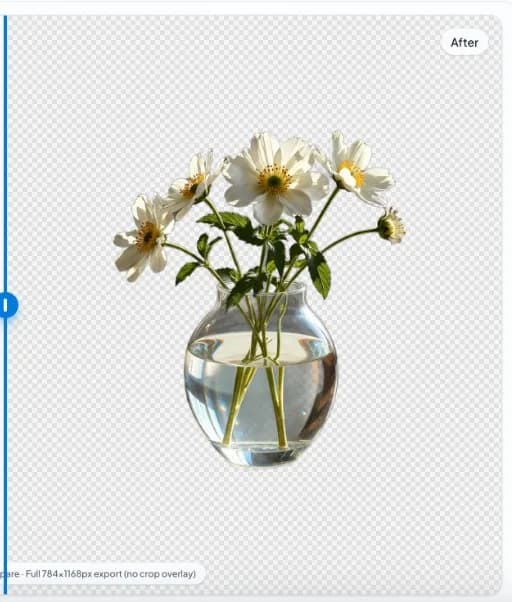
When it works well
Clear separation between product edges and a uniform white or gray backdrop produces clean masks with minimal manual touch-up.
When it is harder
White products on white backgrounds, specular highlights, and soft shadows can confuse boundary detection—improve lighting or separation at capture time.
Workflow
Open the image in the editor, run local AI processing, compare before/after, export at the resolution you need.
Why white backgrounds dominate ecommerce
Marketplaces and brand sites use white or near-white backdrops because they keep attention on the product, simplify theme integration, and reduce color cast from busy scenes. A clean cutout lets you reuse the same asset on PDP heroes, ads, and email without re-shooting.
Capture checklist before you edit
Place the product on seamless paper or a light tent. Leave 15–20 cm between the object and the backdrop to soften shadows. Use diffuse light from both sides to avoid a single hard shadow that merges with the product edge. For glossy packaging, slightly angle the item to move specular highlights away from the silhouette.
- Avoid pure white objects on pure white without separation
- Watch for color spill from colored backdrops
- Shoot at higher resolution than your minimum export target
Local browser workflow on nobg.eu
Open the source JPG or PNG, run segmentation in your tab, inspect hairline edges at 100% zoom, then export transparent PNG for compositing or solid white if your channel requires it. Processing stays on-device for the core edit—useful when catalogs contain unreleased SKUs.
Export settings that survive marketplace review
Prefer PNG-24 for transparency. If the channel mandates JPEG on white, flatten onto #FFFFFF and keep sRGB. Name files with SKU and angle. Re-check dimensions: Amazon main images often want the product to fill ~85% of the frame after background removal.
When reshoot beats re-edit
If the product and backdrop share the same luminance, no tool reliably separates them without manual painting. If shadows are baked into the product edge, segmentation may eat detail. In those cases, adjust lighting and capture again—it is faster than fighting a bad mask.
Quality control before publish
Zoom to 200% on corners and label edges. Look for halos (light fringes) and missing interior holes (bag handles, mesh). Compare against your brand’s reference cutout from a controlled shoot.
Rollout plan for teams
Pilot on ten representative images from your studio before changing an entire catalog pipeline. Record export dimensions, padding, color profile, and filename conventions in a one-page SOP so contractors and virtual assistants produce consistent assets.
QA zoom routine
Inspect edges at 200% on corners, label text, and fine structures. Reject masks with halos, missing interior holes, or color fringing before upload—marketplace acceptance does not equal buyer trust.
Privacy and client work
When photos include unreleased products or identifiable people, prefer local browser inference for the cutout step. Read nobg.eu Privacy Policy for site analytics separately from segmentation architecture.
Channel-specific follow-through
After cutout, each sales channel imposes different flattening, padding, and metadata rules. Build a checklist per channel rather than reusing one JPEG everywhere. Amazon may require pure white mains; Shopify may use transparency; email may need compressed WebP. The same transparent master should feed all three with documented export steps.
Measuring business impact
Track return reasons and zoom engagement on PDPs—not only time per image. Poor edges increase perceived risk even when listings go live. A slightly slower QA workflow often pays for itself in fewer customer service contacts about 'item looked different.'
Tooling boundaries
Browser-local removers excel at interactive QA and privacy-sensitive drafts. They are not a replacement for every DAM automation or print CMYK pipeline. Choose per job: local first for confidentiality and iteration speed; server automation when unattended scale dominates.
Quick reference
Open nobg.eu → import image → run local segmentation → compare edges → export PNG/WebP → composite per channel. Revisit capture if edges fail twice.
Support and corrections
If this page omits a scenario you hit in production, contact nobg.eu with the page URL and a short description. We update editorial content when product behavior or marketplace rules change.
Remove White Background Product Photos: production checklist
For Remove White Background Product Photos workflows on nobg.eu, treat background removal as a controlled production step rather than a one-click gamble. This section focuses on practical Remove White Background Product Photos production steps that keep edge quality predictable. Start from a source file that already separates the subject from the backdrop in luminance and color; local segmentation amplifies good capture decisions and cannot invent missing edge data. Open the asset in the browser editor, run on-device inference, then inspect the mask at 100–200% zoom along high-risk edges before you export. Keep a short checklist: separation at capture, warm-browser inference, zoomed edge review, alpha export, then channel-specific flatten if required. Prefer transparent PNG or WebP masters when downstream systems support alpha, and flatten to a channel-required solid fill only after QA. Document filename patterns, padding conventions, and review checklists so teammates repeat the same quality bar without re-uploading assets to an external cutout API for every draft. When edges fail, fix lighting or reshoot rather than endlessly masking a compromised source—this is usually faster for Remove White Background Product Photos catalogs and keeps privacy intact because pixels for the core edit stay in the browser session.
Remove White Background Product Photos: failure modes and fixes
For Remove White Background Product Photos workflows on nobg.eu, treat background removal as a controlled production step rather than a one-click gamble. Common Remove White Background Product Photos failures are predictable and usually start upstream of the model. Start from a source file that already separates the subject from the backdrop in luminance and color; local segmentation amplifies good capture decisions and cannot invent missing edge data. Open the asset in the browser editor, run on-device inference, then inspect the mask at 100–200% zoom along high-risk edges before you export. If semi-transparent fringe remains, re-export from a less compressed source and avoid lossy re-encoding of alpha masters. Prefer transparent PNG or WebP masters when downstream systems support alpha, and flatten to a channel-required solid fill only after QA. Document filename patterns, padding conventions, and review checklists so teammates repeat the same quality bar without re-uploading assets to an external cutout API for every draft. When edges fail, fix lighting or reshoot rather than endlessly masking a compromised source—this is usually faster for Remove White Background Product Photos catalogs and keeps privacy intact because pixels for the core edit stay in the browser session.
Use cases
Amazon main image prep
Isolate the hero SKU, place on white, verify the product occupies the required frame percentage.
Shopify transparent heroes
Export PNG with transparency for themes that float products over colored sections.
Email and ads
Reuse the same cutout on seasonal backgrounds without re-exporting from a cloud library.
Comparison
Option A
Option B
Upload-first cloud remover
Local browser cutout on nobg.eu
Image leaves your network for inference
Core segmentation runs in your session
Batch API oriented
Interactive single-asset workflow
Account often required
No account for basic editing
Workflow
Step 1: Import
Drag a product photo (PNG/JPG/WebP) into the editor.
Step 2: Segment
Run local AI and compare before/after on difficult edges.
Step 3: Export
Download transparent PNG or WebP at the resolution you need.
Practical examples
- Matte cardboard box on light gray seamless: usually a one-pass mask with minor edge cleanup.
- Glossy black bottle on white: angle the bottle in capture; expect to refine highlights after segmentation.
- White sneaker on white: add a gray sweep or side gradient at shoot time—do not rely on AI alone.
FAQ
Do I need Photoshop?
No. The cutout and export run in the browser on nobg.eu.
Will the export be truly transparent?
Yes when you choose transparent background in export settings.
Do I need Photoshop for white-background product cutouts?
No. nobg.eu runs cutout and export in the browser. Photoshop remains useful for advanced retouching but is not required for standard catalog isolation.
Will the export be truly transparent?
Yes when you choose transparent background in export settings. PNG-24 preserves alpha; JPEG does not.
Are my product images uploaded to a server?
Core editing is designed around local browser inference. Read the Privacy Policy for site analytics and optional consent.
What file format do marketplaces prefer?
Many accept PNG with transparency for compositing; some require flattened JPEG on white. Check your channel’s image spec.
How do I reduce halos on white edges?
Improve separation at capture, avoid overexposed backdrops, and inspect exports at high zoom before upload.
Can I batch hundreds of SKUs in one click?
nobg.eu focuses on interactive browser editing. For large batches, process in sessions and keep a consistent export preset per SKU line.
Does local AI work on phone browsers?
Modern mobile browsers can run the workflow; large images are slower and more memory-intensive than on desktop.
How should I prepare source images for Remove White Background Product Photos?
Shoot or select files for Remove White Background Product Photos with clear subject/backdrop separation, even lighting, and enough resolution for your final export. Soft shadows glued to the silhouette are harder to salvage than sparse backgrounds.
Does nobg.eu upload Remove White Background Product Photos assets for the core cutout?
No. Segmentation for the core edit runs locally in your browser session. Site analytics or optional ads are separate from the cutout pipeline—see the Privacy Policy.
Which export format fits Remove White Background Product Photos delivery?
Use transparent PNG or WebP when your destination supports alpha. Flatten to solid white or brand color only when a marketplace or print pipeline requires it, after edge QA on the Remove White Background Product Photos asset.
What usually breaks Remove White Background Product Photos masks?
Low contrast edges, heavy JPEG blocking, motion blur, and backdrops matching subject luminance. Fix capture first; then re-run local segmentation on a cleaner source.
How do I QA a finished Remove White Background Product Photos cutout?
Preview on white, dark, and brand-colored plates. Zoom into labels, hairlines, glass, and interior holes. Reject exports with halos or chewed corners before publishing.
Related pages
Related topics
Why local processing matters
nobg.eu runs background removal in your browser session. The goal is simple: fewer unnecessary image transfers and faster starts than upload-first pipelines, without promising impossible quality on every edge case.
No upload image editing
Core cutout processing is designed as local image processing: you open a file, the model runs client-side, and you export. You still load the website and assets over HTTPS like any site.
Browser AI explained
Browser AI here means inference executes in web runtime, with WebGPU when available and fallbacks when needed. It is not a generic cloud brain; it is on-device execution after the app loads.